


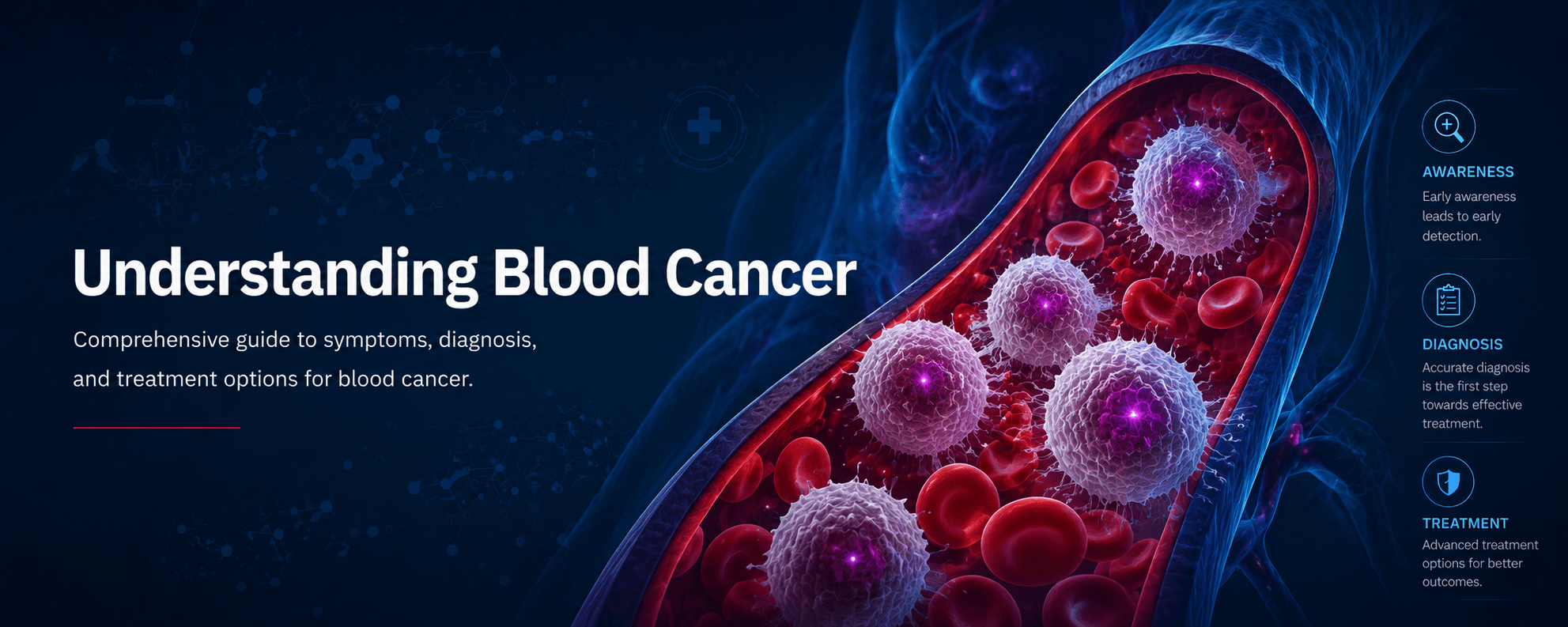

What is Blood Cancer?
Blood cancer refers to cancers that affect the blood, bone marrow, or lymphatic system. This includes leukemia, lymphoma, and myeloma.
Leukemia affects the blood and bone marrow, lymphoma targets the lymphatic system, and myeloma affects plasma cells in the bone marrow. These cancers interfere with the body’s ability to produce healthy blood cells.
Symptoms of Blood Cancer
Fatigue
Feeling extremely tired despite resting, often due to low red blood cell count.
Frequent Infections
Infections that happen more often or take longer to heal, due to low white blood cell count.
Unexplained Weight Loss
Sudden, unexplained weight loss may occur as the cancer progresses.
Pain in Bones or Joints
Pain or tenderness in bones, especially in the back or ribs.
Swollen Lymph Nodes
Lymph nodes, especially in the neck, armpit, or groin, may become swollen and painless.
Easy Bruising or Bleeding
Frequent nosebleeds, easy bruising, or bleeding gums, caused by low platelet count.
Diagnosis and Tests
Blood Tests
Blood tests can reveal abnormalities in the number and type of blood cells, which may indicate leukemia or other blood cancers.
Bone Marrow Biopsy
A sample of bone marrow is taken to check for abnormal cells associated with leukemia or myeloma.
Lymph Node Biopsy
A biopsy of swollen lymph nodes can help diagnose lymphoma and identify its type.
Imaging Scans
CT, MRI, or PET scans are used to check for tumors or spread of cancer in other parts of the body.

Treatment Options
1Chemotherapy
Chemotherapy is the most common treatment for blood cancers. It uses powerful drugs to kill cancer cells and stop their growth.

2Stem Cell Transplant
Stem cell or bone marrow transplant is used to replace damaged marrow with healthy stem cells, especially in leukemia and lymphoma cases.

3Targeted Therapy
Targeted drugs are designed to specifically target cancer cells and minimize damage to healthy cells. It is used in lymphoma and leukemia treatments.

4Immunotherapy
Immunotherapy helps the immune system recognize and attack cancer cells more effectively. It is particularly effective for certain types of lymphoma.

Prognosis and Survival Rates
The prognosis for blood cancer depends on the type of cancer, the stage at diagnosis, and how well the patient responds to treatment. Treatment has improved significantly in recent years, especially for leukemia and lymphoma.
| Type | Description | 5-Year Survival |
|---|---|---|
| Leukemia (Acute) | Rapidly progressing cancer of the bone marrow or blood. | 40-50% |
| Leukemia (Chronic) | Slow-growing leukemia that may be asymptomatic for years. | 70-90% |
| Lymphoma (Hodgkin's) | Cancer of the lymphatic system, typically affecting younger people. | 85-90% |
| Lymphoma (Non-Hodgkin's) | A diverse group of blood cancers affecting the lymphatic system. | 60-70% |
| Multiple Myeloma | Cancer of plasma cells in the bone marrow. | 50-60% |
Need More Information?
If you or a loved one are experiencing symptoms or have been diagnosed with adrenal cancer, our specialists are here to help with expert care and personalized treatment plans.